 ultimate-guide
How to Stage a Home for Sale: 2026 Guide
Table of Contents
- Why Staging Your Home for Sale Changes the Final Price
- Home Staging Checklist: Room-by-Room Before You List
- Best Rooms to Stage for Maximum ROI
- Curb Appeal, Lighting, and Neutral Color Palettes
- Staging Occupied vs. Vacant Homes: What Changes
- Cost of Professional Home Staging: What to Expect
- How Long Does Home Staging Last Before It Needs Refreshing
- Conclusion
Last Updated: August 27, 2026
Why Staging Your Home for Sale Changes the Final Price
Staging a home consistently attracts more competitive offers, reduces days on market, and improves listing photos, all of which directly affect your final sale price. At Nathan Fine - Broker Associate at Luxe Places International Realty, we've guided sellers through this process across Sonoma, Mendocino, and Lake Counties, and the pattern is clear: presentation drives perception, and perception drives price.
Home staging is the practice of preparing and presenting a residential property to appeal to the broadest pool of qualified buyers, with the goal of maximizing sale price and minimizing time on market.
Staging is not decoration, it's spatial psychology. Buyers make emotional decisions in the first 30 seconds of entering a home. Everything you do before that moment either works for you or against you. According to National Association of Realtors staging research, a majority of buyers' agents report that staging makes it easier for buyers to visualize the property as their future home. That visualization converts showings into offers.
Home Staging Checklist: Room-by-Room Before You List
A solid staging checklist works from the outside in. Before arranging a single accent piece, address the fundamentals.
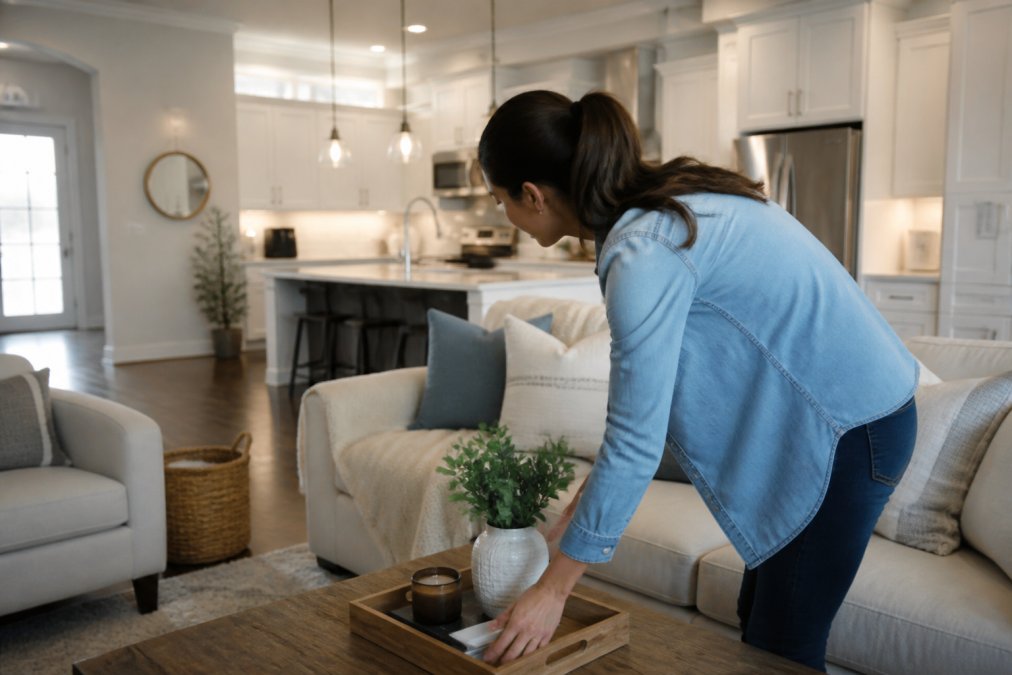
Declutter and Depersonalize Every Room
Buyers cannot visualize themselves in a space that still belongs to someone else. Depersonalizing means removing family photos, personal collections, religious items, and anything that signals "this is MY home" rather than "this could be YOUR home."
A practical decluttering strategy:
- Remove at least one-third of the furniture from every room to improve traffic flow
- Box up personal photos, trophies, and collections entirely
- Clear countertops in kitchens and bathrooms down to two or three functional items
- Empty closets to 50% capacity so buyers see storage potential
- Relocate pet items, children's toys, and exercise equipment to storage or off-site
Minimalism signals care and intention. A show-ready home communicates that the property has been maintained.
Deep Clean Strategies That Show in Listing Photos
Deep cleaning is non-negotiable because listing photos expose everything. A smudged window reads as neglect. The standard is "hotel at opening time," not "clean enough."
Focus your deep clean on these high-visibility areas:
- Windows, inside and out
- Kitchen appliances, including oven interior and refrigerator seals
- Bathroom grout, caulking, and fixtures
- Baseboards, light switches, and door handles
- Ceiling fans, vents, and light fixtures
Real estate photography captures what the eye skips over during a casual walkthrough.
Best Rooms to Stage for Maximum ROI
Not every room deserves equal investment. The best rooms to stage are the ones buyers weigh most heavily in their decision.
| Room | Staging Priority | Why It Matters |
|---|---|---|
| Living Room | Highest | First impression, largest footprint |
| Primary Bedroom | High | Emotional anchor for buyers |
| Kitchen | High | Perceived value driver |
| Primary Bathroom | Medium-High | Spa feel increases appeal |
| Entryway/Foyer | Medium | Sets the tone for the whole tour |
| Secondary Bedrooms | Lower | Functional, not emotional |
Living Room: Furniture Arrangement and Focal Points
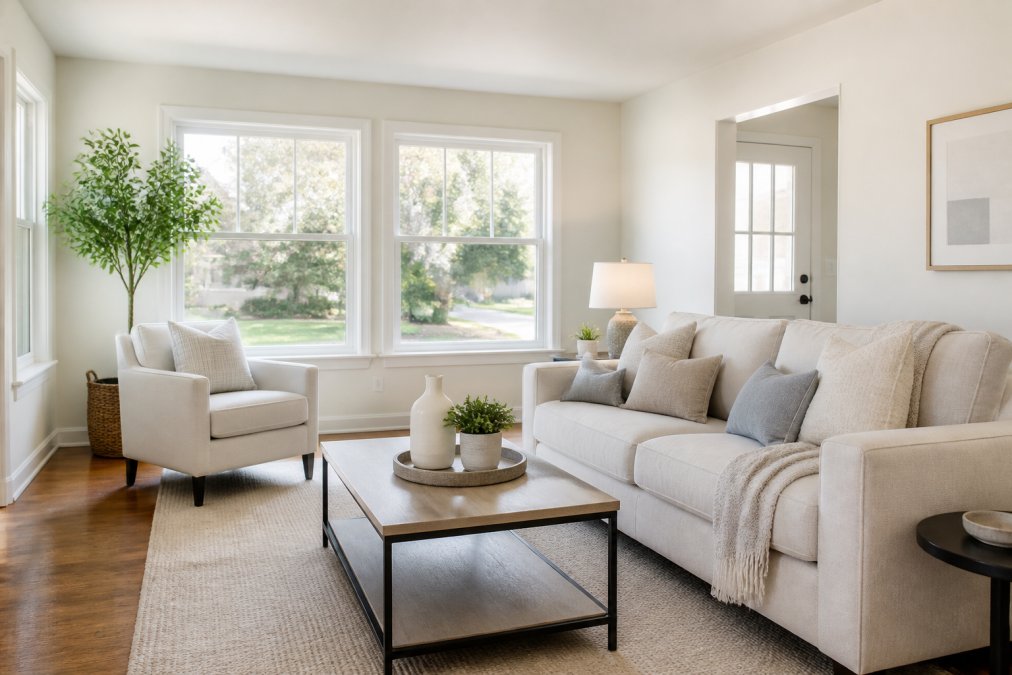
The living room is where buyers mentally move in. Arrange seating to face a clear visual anchor: a fireplace, a view window, or well-chosen art. Pull furniture away from walls by six to twelve inches. Use a neutral palette for large pieces and introduce color only through removable accents. The goal is a functional space that feels aspirational.
Kitchen and Primary Bedroom
The kitchen is where perceived market value lives. Clear every countertop except for two or three intentional items: a bowl of fresh fruit, a quality coffee maker, a small plant. If cabinet hardware is dated, replacing it is one of the cheapest, highest-impact updates available.
The primary bedroom needs to read as a retreat. Use quality bedding in neutral tones, layered pillows, bedside lamps with warm bulbs, and no clutter on nightstands. Remove excess furniture and edit aggressively if the room feels tight.
Curb Appeal, Lighting, and Neutral Color Palettes
First impressions happen before buyers reach the front door. Curb appeal sets expectations for everything that follows.
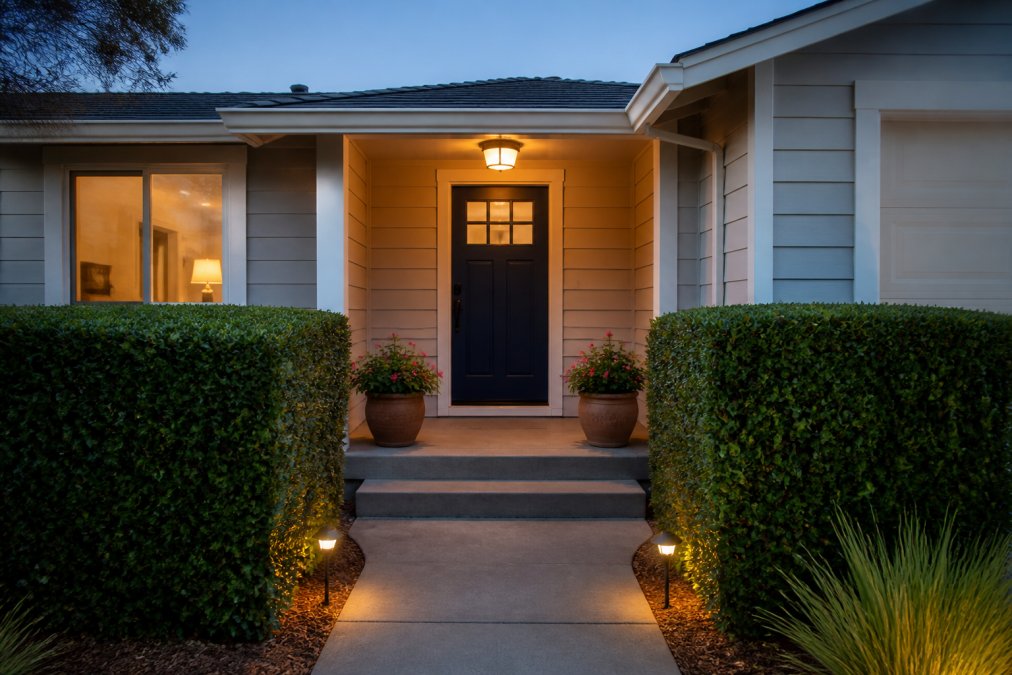
Exterior priorities, in order of impact:
- Mow, edge, and mulch all landscaping
- Power wash the driveway, walkways, and exterior walls
- Paint or replace the front door
- Clean or replace exterior light fixtures
- Add potted plants or seasonal flowers flanking the entry
- Ensure the house number is visible and attractive
Inside, lighting transforms a space more than almost any other staging element. Replace cool fluorescent bulbs with warm LED equivalents throughout. Add floor lamps to dark corners. Open every blind and curtain before showings and during listing photo sessions.
Neutral color palettes appeal to the widest range of aesthetic preferences. According to Zillow's paint color analysis for home sales, certain neutral paint choices are consistently associated with higher sale prices. Neutrals also photograph better, which circles back to listing photos and first impressions.
Staging Occupied vs. Vacant Homes: What Changes
Staging an occupied home and staging a vacant home require fundamentally different strategies.
Occupied home staging means working around the seller's existing furniture and life. The advantage is warmth and scale. The challenge is that most occupied homes need significant editing. The process is subtractive: remove, simplify, and redirect.
Vacant home staging presents the opposite problem. Empty rooms feel smaller than furnished ones. Vacant staging requires bringing furniture and accessories in, which increases cost but gives the stager full creative control.
In both cases, the kitchen and primary bedroom are the highest-priority rooms.
Virtual Staging as a Budget-Friendly Alternative
Virtual staging is the practice of digitally adding furniture, decor, and finishes to photos of an empty room. It's a cost-effective tool, particularly for vacant properties where physical staging costs are prohibitive.
The limitation is transparency: virtual staging must be disclosed, and buyers will see the actual empty space at showings. The best approach is to use virtual staging to generate interest, then ensure the vacant property is as clean and well-lit as possible for in-person visits.
Cost of Professional Home Staging: What to Expect
The cost of professional home staging varies based on home size, whether it is occupied or vacant, scope of work, and your local market. According to HomeAdvisor's home staging cost guide, the range for professional staging services is wide and scales significantly with square footage.
General cost factors to understand:
- Consultation only: Lower cost, seller does the physical work based on professional guidance
- Partial staging: Stager works with existing furniture and adds select rental pieces
- Full vacant staging: Stager furnishes the entire home with rented furniture and accessories
- Duration: Most staging rental agreements run for 30 to 90 days; longer periods increase cost
The relevant question is not what staging costs, but what the absence of staging costs. A home that sits on market for 60 extra days accumulates carrying costs, and price reductions often far exceed what professional staging would have cost upfront.
How Long Does Home Staging Last Before It Needs Refreshing
Home staging typically lasts 30 to 90 days before it needs meaningful refreshing. Most staging rental agreements align with the average days-on-market for a well-priced property.
If a home hasn't sold within 60 days, reassess both pricing strategy and staging. A refresh of the staging, new photography, and a price adjustment can effectively relaunch the listing.
A practical refreshing checklist for extended listings:
- Replace wilting plants or flowers
- Launder all soft staging textiles
- Deep clean again, focusing on high-touch surfaces
- Reassess furniture arrangement in the living room and primary bedroom
- Update listing photos if seasonal changes have improved exterior appeal
The psychology of a "new" listing is real. Buyers who passed the first time will reconsider when the property appears refreshed and repriced.
Selling a home in a competitive market is a presentation problem. The sellers who stage thoughtfully, price accurately, and market aggressively walk away with the strongest results. Nathan Fine - Broker Associate at Luxe Places International Realty brings a third-generation understanding of what buyers respond to across Sonoma, Mendocino, and Lake Counties, combined with tireless advocacy to ensure your property gets in front of the right buyers at the right moment. Contact me to discuss how to stage your home for sale and build a strategy that protects your equity from day one.
Frequently Asked Questions
Is it a good idea to stage a house for sale?
Staging consistently helps homes sell faster and often at a higher price than unstaged properties. A show-ready home photographs better, attracts more buyers to open house events, and creates stronger first impressions both online and in person. Even light staging, decluttering, depersonalizing, and improving lighting, can shift a buyer's perception of the space significantly. For most sellers, the effort and cost return more than they cost.
What are the most important rooms to stage when selling?
The living room, primary bedroom, and kitchen deliver the highest ROI when staged. These are the spaces buyers spend the most time evaluating during tours and open houses. A well-arranged living room with a clear focal point and good traffic flow reads as larger on listing photos. The kitchen should be spotless and clutter-free. The primary bedroom benefits most from neutral bedding, minimal furniture, and soft lighting that signals rest and comfort.
Can I stage my home myself on a budget?
Yes. DIY staging focuses on steps that cost little but have real impact: deep cleaning, removing personal items, rearranging existing furniture for better flow, and adding accent pieces like fresh towels or neutral throw pillows. Improving lighting by replacing dim bulbs and opening blinds before photos is free. If the home is vacant, virtual staging is a lower-cost alternative to renting physical furniture while still producing professional listing photos.
How much does it cost to stage your house to sell?
Staging costs vary based on home size, the number of rooms staged, and whether you hire a professional or do it yourself. A staging consultation alone typically costs less than full-service staging where a professional supplies furniture and decor. Vacant homes generally cost more to stage than occupied ones because all furnishings must be sourced and delivered. Contact a local real estate professional for guidance on what level of staging makes sense for your specific property and price point.
This article was written using GrandRanker