
 how-to
Selling Distressed Property in Mendocino: 2026 Guide
Table of Contents
- What Defines a Distressed Property in Mendocino?
- Step 1: Assess Your Equity and the Property's Condition
- Step 2: Understand Real Estate Disclosure Laws California Requires
- The Transfer Disclosure Statement (TDS) and Its Limits
- The Natural Hazard Disclosure (NHD) Package
- The Local Option: Mendocino County-Specific Disclosures
- The Foreclosure and Bank-Owned Exemption Trap
- The Statute of Limitations and What Actually Happens If You Miss a Defect
- The As-Is Clause Does Not Shield You
- The Agent's Role in Disclosure Compliance
- The Bottom Line on Disclosure
- Step 3: How to Sell a House As-Is Without Losing Value
- Step 4: Compare Cash Home Buyers Mendocino Owners Trust
- The Capital Gains Question: What You Actually Owe
- The Foreclosure and Short Sale Tax Trap
- Property Tax Consequences in Mendocino County
- The Real Cost Comparison: Net Proceeds After Taxes
- The 1031 Exchange Option for Investors
- The Bottom Line on Cash Buyers and Taxes
- Why Local Buyers Often Beat National iBuyers
- Repair vs. Sell As-Is: A Cost-Benefit Analysis
- Conclusion: Your Path to a Successful Sale
- Frequently Asked Questions
Last Updated: September 9, 2026
What Defines a Distressed Property in Mendocino?
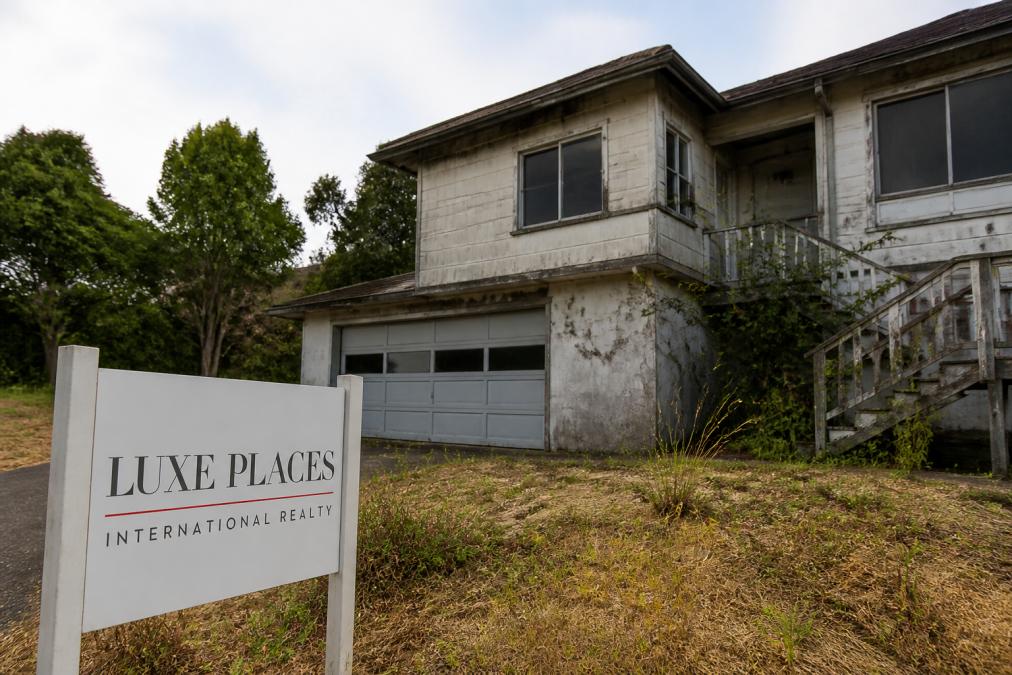
A distressed property is a home that has fallen into financial or physical disrepair, often due to foreclosure, an unpaid balance, or years of deferred maintenance. In Mendocino County, these range from coastal cottages with deferred maintenance to inland parcels behind on taxes or mortgage payments. The structure's condition and the owner's finances determine whether you're dealing with a pre-foreclosure, a bank-owned property, or a tax-defaulted parcel.
Selling a distressed property, unlike a standard listing, often carries legal and financial complications that require careful navigation, a tax-defaulted property involves a very different process than a short sale where the unpaid balance exceeds market value.

Selling a distressed property doesn't automatically mean selling at a steep discount. The as-is market in Mendocino is active, driven by investors who understand the potential equity in a property that needs work. The real challenge is understanding what you're legally required to disclose and how to structure the transaction to protect your interests.
Step 1: Assess Your Equity and the Property's Condition
Before making decisions, determine what the property would sell for in its current condition versus after repairs. A local appraiser familiar with Mendocino's market can give you a realistic value estimate as your baseline.
Equity assessment checklist:
- Order a title search to identify any liens, judgments, or unpaid balance issues
- Request a comparative market analysis from a local agent
- Get at least two contractor bids for necessary repairs
- Check your county property tax records for any tax-defaulted status
- Review your mortgage documents for prepayment penalties
A common mistake is assuming the property has no equity without doing the math. Even a distressed property needing significant work may hold equity if you purchased it years ago or the market has appreciated. In Mendocino County, where median listing prices have remained stable, many owners find they have more equity than expected.
Walk through the property with a contractor and categorize every issue as cosmetic, functional, or structural. Cosmetic problems like dated kitchens or worn flooring won't dramatically affect your sale price; structural issues, foundation problems, or a failing roof will.
Step 2: Understand Real Estate Disclosure Laws California Requires
California’s disclosure regime is among the most demanding in the country, and for a distressed property the stakes are higher because defects are often more severe. The legal framework starts with the California Civil Code, but practical obligations extend far beyond filling out a form.
The Transfer Disclosure Statement (TDS) and Its Limits
The California Civil Code transfer disclosure statement requirements require the seller to complete a Transfer Disclosure Statement (TDS), a detailed questionnaire covering everything from roof condition to soil stability. But for a distressed property, the TDS is only the starting point. California law also imposes a duty to disclose any "material facts" that are not readily observable, even if they are not explicitly asked on the form. This includes known neighborhood nuisances, unpermitted work, or a history of mold.
The Natural Hazard Disclosure (NHD) Package
Beyond the TDS, sellers in Mendocino County must typically provide a Natural Hazard Disclosure (NHD) package. This is not optional. The NHD includes:
- Special Flood Hazard Area status, relevant for properties near the coast or the Russian River
- Very High Fire Hazard Severity Zone, a designation that applies to large portions of Mendocino County’s wildland-urban interface
- Earthquake fault zone, less common here, but the report will confirm
- Seismic hazard zone, including liquefaction and landslide risk
A distressed property that has sat vacant may have deferred maintenance intersecting with these hazards, for example, a fire-damaged roof in a high-fire zone. The NHD report is prepared by a third-party vendor, typically costs $150-$300, and is delivered to the buyer before or with the purchase agreement.
The Local Option: Mendocino County-Specific Disclosures
Mendocino County does not impose a county-specific disclosure form beyond state requirements, but the Assessor-Recorder’s office maintains records that can reveal unpermitted structures, septic failures, or well issues. For a distressed property, especially one in a family for decades, it's common to discover a porch, garage, or addition built without a permit. Under California law, the seller must disclose known unpermitted work; if it's significant, the sale can stall unless the seller obtains a retroactive permit or negotiates a credit.
The Foreclosure and Bank-Owned Exemption Trap
A common misconception is that bank-owned (REO) properties are exempt from disclosure requirements. They are not entirely exempt, but the rules differ. When a lender takes title through foreclosure, the bank is not required to provide a TDS because it never occupied the property, but it must still disclose known material defects. If you are selling a pre-foreclosure or short sale, you are still the seller of record until the lender takes title, so your disclosure obligations remain in force.
The Statute of Limitations and What Actually Happens If You Miss a Defect
A buyer who discovers a concealed defect after closing has legal recourse. Under California Code of Civil Procedure Section 337.15, the statute of limitations for latent construction defects is 10 years; for other undisclosed defects, the buyer generally has three years from discovery. The practical risk is not just a lawsuit, it is that the buyer’s insurer or attorney will pursue a claim against your title insurance or your agent’s errors-and-omissions policy. In a distressed sale to an investor who plans to renovate, the investor may sign a waiver of known conditions, but that waiver does not cover defects you knew about and did not disclose.
The As-Is Clause Does Not Shield You
An "as-is" clause transfers responsibility for repairs to the buyer, but it does not waive the seller’s duty to disclose known defects. California courts have consistently held that an as-is clause does not protect a seller who actively conceals a problem. For a distressed property, the most common failure point is the seller who skips the pre-listing inspection to avoid learning about issues. That strategy backfires: the law requires you to disclose what you know and to conduct a reasonable inspection. If a reasonable inspection would have revealed a failing foundation, you are liable for not knowing.
The Agent's Role in Disclosure Compliance
Your listing agent has a statutory duty under California Business and Professions Code Section 10176 to conduct a reasonably competent visual inspection and disclose any material facts observed. An agent who handles distressed properties regularly will walk the property with you, flag obvious issues, and help you decide what to disclose versus investigate further, a strong argument for working with a local professional who understands Mendocino County’s hazard zones and permitting history.
The Bottom Line on Disclosure
The disclosure process for a distressed property is a risk-management exercise. The cost of a thorough pre-listing inspection (typically $400-$700 in Mendocino County) is a fraction of the potential liability from a single undisclosed roof leak or foundation crack. Complete the TDS honestly, order the NHD package, review the permit history, and let your agent guide you on what to investigate further.
Step 3: How to Sell a House As-Is Without Losing Value
Selling a house as-is doesn't mean accepting a lowball offer. The approach is about pricing and positioning, attracting buyers who understand the property's potential and will pay a fair price based on its current condition.
Steps to maximize your as-is sale value:
- Price based on comparable as-is sales, not renovated comps
- Get a pre-listing inspection to identify issues before buyers do
- Obtain repair estimates so buyers understand the actual cost of improvements
- Market the property's potential, location, and land value
- Be prepared to negotiate on price but not on disclosure
A strategic decision is whether to sell through a traditional listing or to a cash home buyer. A traditional listing gives you access to the full market, including buyers who may pay more for a distressed property with good bones. The trade-off is time, since as-is properties often take longer to sell and may require multiple price adjustments.
How to sell a house as-is effectively often comes down to who you're selling to. Real estate investors and flippers are your primary audience for a truly distressed property. They're looking for a quick sale with a clear title and a realistic price, a fair deal that leaves room for their renovation costs and profit margin.
Step 4: Compare Cash Home Buyers Mendocino Owners Trust
Cash home buyers in Mendocino fall into several categories, and understanding the differences protects you from leaving money on the table. Local investors who know the Mendocino market typically offer more than national iBuyer platforms because they understand coastal and inland property values. But before comparing offers, understand the tax consequences, the IRS treats a distressed sale differently than a standard home sale, and the difference can cost thousands.
The Capital Gains Question: What You Actually Owe
When you sell for more than your adjusted cost basis, you owe federal capital gains tax on the profit. For a primary residence, the IRS Section 121 exclusion allows you to exclude up to $250,000 of gain ($500,000 for married filing jointly) if you have owned and lived in the home for at least two of the five years before the sale (irs.gov). For a distressed property, especially one inherited or not lived in recently, that exclusion may not apply.
For an inherited property, the cost basis is "stepped up" to fair market value at the date of the original owner's death. If you inherited a home worth $400,000 and sell it for $450,000, your taxable gain is only $50,000, even if the original owner paid $100,000 decades ago. This is critical for distressed sellers who inherited a property and assumed they would owe massive taxes.
For a rental property or second home, the Section 121 exclusion does not apply. You will owe capital gains tax at the long-term rate (0%, 15%, or 20% depending on your income bracket) on the gain above your adjusted basis, plus depreciation recapture of up to 25% on any depreciation you claimed.
The Foreclosure and Short Sale Tax Trap
If you sell through a short sale, where the lender accepts less than the outstanding mortgage balance, the forgiven debt may be treated as taxable income. The Mortgage Forgiveness Debt Relief Act of 2007 provided an exclusion for qualified principal residence debt, extended through 2025, but it applies only to debt used to buy, build, or substantially improve your primary residence. If the forgiven debt was from a home equity line used for other purposes, or the property is not your primary residence, you may owe income tax on the forgiven amount.
For a foreclosure, the same rules apply. If the lender forecloses and the sale price is less than the mortgage balance, the deficiency may be taxable. In California, a first mortgage on a primary residence is generally a non-recourse loan, meaning the lender cannot pursue you for the deficiency, but the IRS can still treat the forgiven amount as income unless an exclusion applies.
Property Tax Consequences in Mendocino County
California's Proposition 19, passed in 2020, changed the rules for inherited property. Under the old rules, inherited property received a full reassessment exemption. Under Proposition 19, the parent-to-child exclusion applies only if the child uses the property as their primary residence and the assessed value does not exceed the parent's by more than $1 million. For a distressed property that has appreciated significantly, the tax bill can jump dramatically after inheritance, often a trigger for selling.
If you are selling a tax-defaulted property to the county, the process is entirely different. Mendocino County holds a public auction for tax-defaulted parcels, and proceeds go to satisfy delinquent taxes, penalties, and costs. If the auction price exceeds the amount owed, the excess may be available to the former owner, but the process is governed by the California Revenue and Taxation Code, not a standard real estate transaction. Selling to a private buyer before the county auction is almost always a better financial outcome because you control the price and timeline.
The Real Cost Comparison: Net Proceeds After Taxes
When comparing a cash offer to a traditional listing, compare net proceeds after taxes, commissions, and carrying costs. A cash offer at $350,000 may net you more than a traditional listing at $400,000 if the traditional sale requires $24,000 in commissions, $8,000 in repairs, and $6,000 in carrying costs over a 90-day closing. Add in tax implications of a delayed sale pushing you into a higher capital gains bracket, and the cash offer becomes even more attractive.
| Sale Method | Timeline | Repairs Needed | Price Expectation | Tax Considerations | Best For |
|---|---|---|---|---|---|
| Traditional Listing | 60-90+ days | Buyers expect some condition | Full market value | Full capital gains exposure; may qualify for Section 121 | Properties in decent shape with time to wait |
| Cash Sale to Investor | 2-4 weeks | None, sold as-is | Below market value | Same capital gains rules; faster close may reduce carrying costs | Distressed or urgent situations |
| Short Sale | 60-120+ days | Lender approval required | Less than mortgage balance | Potential taxable forgiven debt | Underwater properties with lender cooperation |
| County Tax Auction | Varies | None, sold as-is | Determined by auction | Excess proceeds may be taxable | Tax-defaulted parcels with no other option |
The 1031 Exchange Option for Investors
If you own a distressed rental property and are selling to a cash buyer, you may qualify for a Section 1031 like-kind exchange, which defers capital gains tax by reinvesting proceeds into another investment property. The rules are strict: you must identify a replacement property within 45 days and close within 180 days. A cash sale works well with a 1031 exchange because the timeline is predictable with no financing contingency, a strategy most distressed sellers never consider that can save tens of thousands of dollars.
The Bottom Line on Cash Buyers and Taxes
The decision to sell to a cash buyer is about the total financial outcome. A cash offer that closes in two weeks may save you from a foreclosure that destroys your credit and triggers a taxable deficiency. A traditional sale that nets a higher price may push you into a higher tax bracket or require repairs that eat your profit. Run the numbers with a tax professional before committing, and ask every cash buyer for a detailed breakdown of their offer, including any fees or credits.
Why Local Buyers Often Beat National iBuyers
National iBuyer platforms use algorithmic pricing based on county-wide data, often undervaluing properties in micro-markets like Mendocino's coastal communities or the Anderson Valley. A local investor who understands demand for vineyard-adjacent parcels or the Ukiah rental market will often pay more because they see a clearer path to profit. Local buyers also close faster without waiting for a corporate underwriting committee. When comparing offers, ask each buyer how they arrived at their price and their renovation budget assumptions, a buyer who articulates a specific plan is likely offering a more realistic price.
Repair vs. Sell As-Is: A Cost-Benefit Analysis
The decision to repair or sell as-is comes down to a simple calculation: will the increase in sale price exceed the cost and time of repairs? For a distressed property with structural issues, the answer is often no. For a property with mostly cosmetic problems, targeted repairs can yield a significant return.
When repairs make sense:
- The property is structurally sound with only cosmetic issues
- You have the time to wait for the renovation to complete
- The repaired value exceeds the as-is value by more than 1.5 times the repair cost
- You can fund the repairs without financial strain
When selling as-is makes sense:
- The property has foundation, roof, or systemic issues
- You need to close quickly due to foreclosure or financial pressure
- The carrying costs of holding the property exceed the potential profit
- You lack the funds or time to manage a renovation
A common mistake is overestimating the return on repairs. In Mendocino County's residential market, buyers expect certain standards, but they also value authenticity and potential. Over-improving a property in a neighborhood where comparable homes are modest can actually hurt your return. The Remodeling Magazine's cost vs. value analysis has consistently shown that few renovations return their full cost at resale.
If you're facing foreclosure, a tax-defaulted sale, or can't afford the carrying costs of a lengthy renovation, selling as-is to a cash buyer is almost always the better financial decision. The equity you preserve by avoiding foreclosure and additional debt typically outweighs the discount you accept on the sale price.
Conclusion: Your Path to a Successful Sale
Selling a distressed property in Mendocino requires balancing California disclosure law, your financial realities, and the decision of whether to repair or sell as-is. Owners who navigate this successfully get clear answers early about their equity position, disclosure obligations, and the realistic market value of their property in its current condition.
That's where working with an agent who understands distressed sales makes the difference. Nathan Fine, a third-generation real estate professional at Luxe Places International Realty, brings a diligent, problem-solving approach to every transaction across Sonoma, Mendocino, and Lake Counties. Whether you're facing a pre-foreclosure timeline, dealing with a tax-defaulted parcel, or ready to move on from a property that has become a burden, an advocate who knows the local market and legal landscape protects your interests at every step.
Contact Nathan Fine today for an honest assessment of your property's value and a clear path forward. With the right guidance, selling a distressed property can be a straightforward transaction that preserves your equity and gives you a clean start.
Frequently Asked Questions
What is the fastest way to sell a distressed property in Mendocino?
The fastest route is usually a cash sale to a local investor or cash home buyer. These transactions skip the traditional financing process, which removes the risk of appraisal or loan approval delays. A cash sale can close in as little as one to two weeks, compared to the standard 30 to 45 days. However, cash offers often come in below market value. Weigh the speed against the lower price to decide if this trade-off makes sense for your situation.
What must I disclose when selling a property as-is in California?
California's disclosure laws are strict, even for as-is sales. You must complete the Seller Property Questionnaire and the Transfer Disclosure Statement, which require you to reveal known material defects like roof leaks, foundation issues, or plumbing problems. You also have a duty to disclose any deaths on the property within the last three years and whether it's in a high-fire hazard zone. Withholding known issues can lead to legal liability after the sale, so work with an agent to ensure full compliance.
Are there tax consequences for selling a property for less than I owe?
Yes, the tax implications depend on your specific situation. If you sell through a short sale, where the lender accepts less than the unpaid balance, the forgiven debt may be considered taxable income by the IRS, although the Mortgage Forgiveness Debt Relief Act has provided exceptions in the past. You should also be aware of capital gains taxes on any profit from the sale. Consult a tax professional to understand how the sale impacts your federal and state tax return before you close.