 ultimate-guide
Best Ways to Market a Luxury Home: 2026 Guide
Table of Contents
- Why Luxury Home Marketing Differs from a Standard Listing
- Build a Luxury Real Estate Marketing Plan Template That Drives Results
- Luxury Real Estate Photography Tips: Capture the Lifestyle
- Best Practices for Luxury Home Staging: Appeal to the Right Buyer
- Create a Property Narrative for Affluent Buyers
- Use Private Showings and Exclusive Open Houses
- How Long Does It Take to Sell a Luxury Home? Set the Right Timeline
- Conclusion: Partner with an Agent Who Masters Luxury Marketing
- Frequently Asked Questions
Last Updated: September 7, 2026
Why Luxury Home Marketing Differs from a Standard Listing
A luxury home is not sold by its square footage or its number of bedrooms. It is sold on emotion, lifestyle, and exclusivity, which is why the best ways to market luxury home properties require a fundamentally different playbook than a standard residential listing. Standard marketing casts a wide net; luxury marketing curates a targeted experience for a specific, often private, audience.
Affluent buyers are not browsing the multiple listing service for deals. They respond to a story, a feeling of prestige, and the promise of a lifestyle that matches their identity. Marketing a prestige property is about brand positioning as much as architecture. The goal is to generate qualified leads, not just views, by appealing to high-net-worth individuals who value discretion and a curated experience.
Build a Luxury Real Estate Marketing Plan Template That Drives Results
Before a single photo is taken, you need a strategy. A luxury real estate marketing plan template should be built on market analysis and buyer demand, not guesswork. This roadmap ensures every dollar is intentional and every channel serves a specific purpose in reaching target demographics.
Structure the plan to cover the entire buyer journey, from awareness to the final offer, by breaking the campaign into distinct phases that build momentum and exclusivity around the listing.
- Pre-Launch (Weeks 1-2): Focus on creating the property narrative, professional photography, and a dedicated property website. This is the quiet period where you build anticipation without public exposure.
- Launch (Weeks 3-4): Syndicate the listing across digital portals and luxury networks. Host a private showing for local agents and begin targeted social media marketing strategies.
- Sustained Engagement (Weeks 5-8): Deploy direct mail campaigns to a curated list, run retargeting ads, and feature the home in luxury lifestyle magazines to maintain visibility and social media engagement.
- Evaluation (Week 8+): Review lead sources and conversion rates. Adjust the strategy based on which channels are generating the most serious inquiries from affluent buyers.
Luxury Real Estate Photography Tips: Capture the Lifestyle
You cannot sell a luxury home with average photos. High-end photography and videography are the single most important investment you can make, as they form the first impression for every potential buyer. The goal is not to document rooms but to capture the lifestyle the home offers. In a competitive market, simply hiring a photographer is not enough; the difference between a lingering listing and one that generates multiple offers often comes down to technical execution and strategic use of that visual content.
Professional photography for a prestige property goes beyond a wide-angle lens. It requires an understanding of natural light, architectural lines, and how to make a space feel grand yet inviting. A common mistake is relying on the listing agent's camera; the best ways to market luxury home properties often involve a team of specialists, and the real edge lies in the details of the shoot itself.
- Hire a specialist with a luxury portfolio: Look for photographers who have a portfolio of high-end homes, not just real estate generalists. Ask to see their work in editorial publications like Architectural Digest or Dwell. Their experience with challenging lighting situations, like glass walls, dark wood paneling, or expansive great rooms, is non-negotiable.
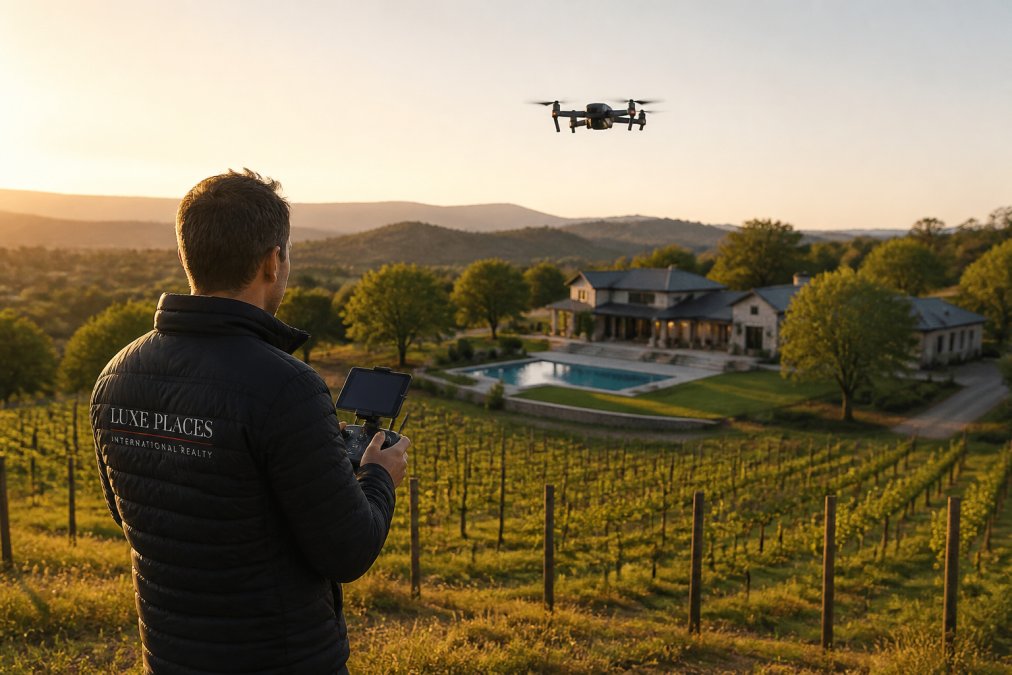
- Use drone photography strategically: Aerial shots are non-negotiable to showcase the property's land, views, and proximity to amenities like a vineyard or coastline (realtor.org). But the best results come from shooting during the "golden hour", the hour after sunrise or before sunset, to capture warm, dramatic light that flatters the architecture and landscaping.
- Invest in cinematic videography: A walkthrough video set to music creates an emotional connection that still photos cannot achieve. For top-tier properties, consider a narrative film that tells the property's story, not just a room-by-room tour. This is where the property narrative and the visual content converge.
- Consider virtual staging with a purpose: If a home is vacant, virtual staging with high-end furnishings helps buyers visualize the potential of each room without the cost of physical staging. However, the most effective virtual staging is tailored to the specific lifestyle of the target demographic, a home office with built-in bookshelves for a professional, or a serene yoga studio for a wellness-focused buyer.
Beyond the shoot, strategic use of this content drives qualified leads. A curated selection of hero images can be more effective than uploading many photos to the MLS. This can create scarcity and intrigue, prompting buyers to request a private viewing, while protecting the property narrative by telling the story in a controlled, compelling sequence.
Finally, consider the data-driven ROI on your visual assets. While you cannot track a direct click from a photo to a sale, you can monitor engagement metrics on your dedicated property website and social media channels. This data informs both the current campaign and future marketing plans, allowing you to double down on the visual styles that resonate most with affluent buyers in your market.
Best Practices for Luxury Home Staging: Appeal to the Right Buyer
Staging a luxury home is about creating a canvas for the buyer's aspirations, not showcasing your personal taste. The best practices involve decluttering to a minimalist standard and filling the space with high-end furnishings that speak to the target demographic, sleek and contemporary for a modern masterpiece, period-appropriate for a historic estate.
The goal is a neutral yet aspirational environment that allows buyers to picture their own art and family in the space. Staging for specific demographics is a critical angle many guides miss: a younger tech buyer might respond to smart-home features and minimalism, while an older, downsizing buyer might seek warmth, comfort, and single-level living.
Create a Property Narrative for Affluent Buyers
A property narrative connects the home's physical structure to the buyer's emotional desires. For affluent buyers, this is often the deciding factor, they are purchasing a legacy, a retreat, or a statement of success, not just walls and a roof. The narrative weaves architecture, history, and location into a compelling reason to buy.
This story must be told consistently across every channel, from the property brochures to the dedicated property website and social media posts. Instead of a feature list that says "gourmet kitchen," the narrative says, "a chef's kitchen designed for hosting intimate dinner parties that spill out onto the terrace overlooking the valley." This lifestyle marketing approach transforms a transaction into an experience. For a home in Sonoma County, the story might focus on vineyard views and farm-to-table living; for a coastal property, it is about the sound of the waves and the privacy of the bluff.
Use Private Showings and Exclusive Open Houses
Public open houses are a tool for standard listings, but they can devalue a luxury property by making it feel accessible to the masses. The most effective way to market a luxury home to serious buyers is through private showings and exclusive open houses, which create scarcity and prestige. For high-net-worth individuals, discretion is often as important as the property itself; a successful private event never appears on a public calendar and its guest list is vetted with the rigor of a private club membership.
These events are not about foot traffic; they are about networking with affluent circles and building a curated guest list. An exclusive open house might be a champagne reception for select neighbors, local business leaders, and qualified leads from the agent's database, positioning the home as a community centerpiece. This requires concierge-level services and discretion; the invitation itself signals that this is a special property for a select few.
To execute this effectively, consider these operational protocols that signal professionalism and build trust with the seller:
- Pre-Qualification is Non-Negotiable: Before any private showing, every potential buyer must be pre-qualified by the listing agent's team. This goes beyond a simple mortgage pre-approval; it often involves a conversation about the buyer's timeline, motivation, and ability to transact at the price point. This protects the seller's privacy and ensures that the agent's time is spent only with serious parties.
- Implement a Secure Showing Protocol: For properties above a certain price point, it is common practice to require a buyer's agent to accompany their client and to verify identification at the door. Some agents go a step further, using a secure scheduling system that does not publicly display the property's address. This prevents unvetted lookers and protects the seller's security.
- Curate the Guest List for the Exclusive Open House: The invitation list should be a strategic mix of: 1) qualified buyers from the agent's database, 2) top-producing buyer's agents from competing luxury brokerages, and 3) influential local figures who can spread the word in the right circles. The goal is not to fill the house but to fill it with the right people.
- Create an Experiential Event: The event itself should be a reflection of the property's narrative. If the home has a professional-grade kitchen, hire a local chef to do a cooking demonstration. If it has a wine cellar, bring in a sommelier for a tasting. This transforms the open house from a viewing into an experience, making the property memorable long after the guests leave.
Finally, agents can use these private events as a data-gathering opportunity, tracking which guests showed genuine interest, what they commented on, and what objections were raised. This feedback loop can be invaluable for refining the marketing message and helping the seller understand the market's perception of the home's value.
How Long Does It Take to Sell a Luxury Home? Set the Right Timeline
One of the most common questions from sellers is how long does it take to sell a luxury home, and the honest answer is that it varies significantly. Unlike standard homes that might sell in a few weeks, a prestige property can take several months to find the right buyer, often dictated by the property's uniqueness and the patience required to find the right match (knightfrank.com).
Sellers need to understand that the luxury market has a smaller pool of buyers who often make decisions on their own timelines, not the seller's. A common mistake is pricing the home too high based on emotion, causing it to sit on the market and lose its initial appeal. Strategic pricing based on a comparative market analysis is essential to generate early interest.
| Factor | Standard Home | Luxury Home |
|---|---|---|
| Buyer Pool | Large, diverse | Small, niche, specific demographics |
| Marketing Focus | Maximum exposure, MLS | Targeted, curated, global reach |
| Typical Timeline | Weeks to a few months | Several months to a year or more |
| Decision Driver | Price and location | Lifestyle, exclusivity, property narrative |
Conclusion: Partner with an Agent Who Masters Luxury Marketing
Marketing a luxury home is a complex, multi-faceted process that demands creativity, discretion, and a deep understanding of the affluent buyer's psychology. From cinematic videography and immersive 3D tours to global buyer outreach and networking, every detail must be executed with precision to protect your asset and achieve top dollar.
You need an advocate who understands that this is not just a transaction, but the culmination of years of equity and memories. Nathan Fine, a third-generation real estate professional with Luxe Places International Realty, brings a dedicated, problem-solving approach to every listing. He specializes in the nuances of the Northern California market and offers the creativity and diligent advocacy needed to navigate a competitive sale. Contact Nathan Fine to ensure your property receives the strategic, high-touch marketing it deserves.
Frequently Asked Questions
How long does it take to sell a luxury home?
Luxury homes often take longer to sell than standard properties because the buyer pool is smaller. While a typical home might sell in a few weeks, a high-end property can take several months or more. The timeline depends on pricing, market conditions, and how effective your marketing strategy is at reaching qualified buyers. A targeted plan that includes global outreach and private showings can shorten this period significantly.
What are the key strategies for luxury property marketing?
Effective luxury property marketing focuses on lifestyle and exclusivity, not just square footage. Key strategies include professional photography and cinematic videography to create a strong property narrative, targeted digital syndication, and networking within affluent circles. Best practices for luxury home staging also play a vital role in helping buyers envision the lifestyle. The goal is to generate qualified leads through a curated experience that emphasizes privacy and discretion.
Why is a luxury real estate marketing plan template important?
A structured luxury real estate marketing plan template ensures no detail is overlooked. It helps you coordinate professional staging, high-end photography, a dedicated property website, and exclusive events on a clear timeline. This organized approach allows for data-driven ROI analysis, showing which strategies attract affluent buyers. A solid plan also streamlines communication, ensuring the seller and agent are aligned on goals and expectations from day one.
How does professional staging impact the sale of a luxury home?
Professional staging helps affluent buyers connect emotionally with a property. Best practices for luxury home staging often involve using high-end furnishings and artwork to create a neutral yet aspirational backdrop. This approach can make a home more photogenic and help buyers focus on the architectural details rather than personal items. Effective staging for specific demographics can significantly increase perceived value and generate stronger offers.